
When a child's speech doesn't progress as expected, it can be concerning and bring up other fears and worries. Let's take a look at speech development and highlight signs to look for when considering a speech disorder.
English Consonant Acquisition: Children typically learn speech sounds gradually as they grow. While there is some variation, here's a general guideline for the age of acquisition for English consonants:
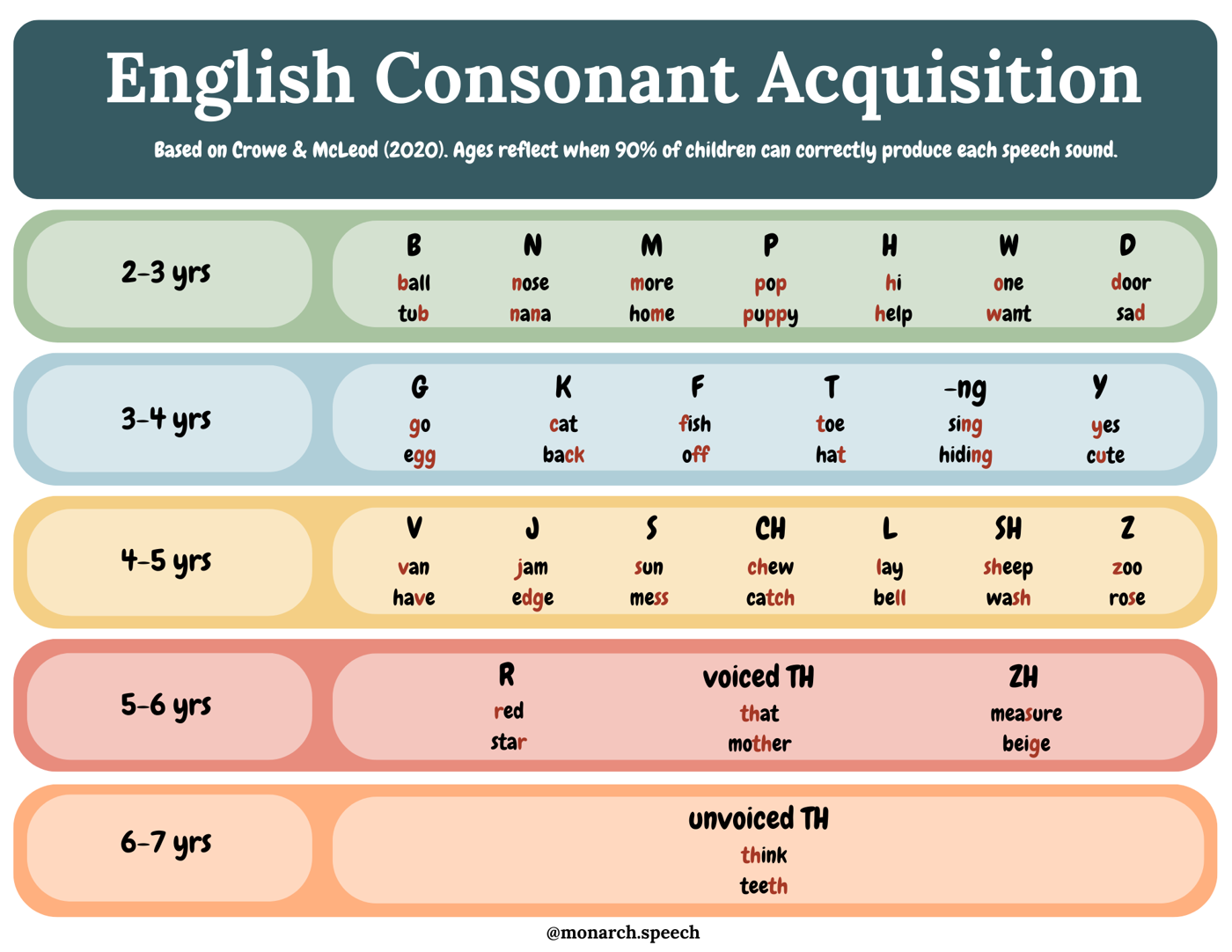
As children learn to produce sounds, there may be errors in their speech. These errors are a normal part of development, and typically resolve on their own at certain ages. Hearing a 2-year-old say "tat" instead of "cat" is not uncommon, since many 2-year-olds haven’t developed the “k” sound yet. By around age 4, though, most children can say the “k” sound, so continuing to say "tat" might indicate a need for speech therapy. Different speech errors are expected at different ages. Knowing what's developmentally appropriate can be confusing, so if you have questions about your child's speech, don't hesitate to reach out to a speech-language pathologist.
Signs of Speech Delay or Disorder: If your child's speech development is not following the expected milestones, it may be a sign of a speech delay or disorder. Here are some red flags to look for:
- Limited speech sounds: If your child is consistently not producing age-appropriate sounds or struggling to produce certain sounds, this may indicate a speech disorder.
- Difficulty being understood: If people have difficulty understanding your child's speech, or if they are not 100% intelligible by 5 years old, this could be due to a speech issue.
- Frustration or avoidance: Children with speech disorders may show frustration when attempting to communicate, or actively avoids speaking situations,
- Lack of progress: If you notice little to no improvement in your child's speech over time, it may mean that there is a disorder and intervention is needed.
What to Do Next: If you suspect that your child may have a speech delay or disorder, it's crucial to seek professional evaluation and guidance. Here are some steps you can take:
- Consult a Speech-language pathologist (SLP): An SLP is a trained professional who specializes in speech and language development. They can conduct a comprehensive evaluation to determine if there is a delay or disorder and recommend appropriate interventions.
- Early Intervention: Many states offer early intervention services for children with speech and language concerns. These programs are designed to provide support and therapy from birth to three years of age.
- Practice at home: Regardless of whether your child has a speech delay or not, you can support their speech development at home. Subscribe to my email list below, and follow me on Instagram (@monarch.speech) for ideas on how to do this.
Every child is unique, and speech development can vary. However, if you have concerns about your child's speech, don't hesitate to seek professional advice. With early intervention and support, many speech delays and disorders can be effectively addressed, leading to positive progress and improved communication skills for your child.